X-FAB Q1 shows strong wide-bandgap growth
X-FAB has announces Q1 2026 results with revenue of $195.6m, down 4 percent year-on-year (YoY) and down 12 percent quarter-on-quarter (QoQ). EBITDA was $34.2m, down 30 percent YoY and down 19 percent QoQ. EBIT was $2.3m, down 89 percent YoY and down 77 percent QoQ
Microsystems business was at all-time high revenue at $33.7m, up 42 percent YoY and up 35 percent QoQ. Strong growth of wide-bandgap revenue reached $15.1m, up 152 percent YoY and up 49 percent QoQ.
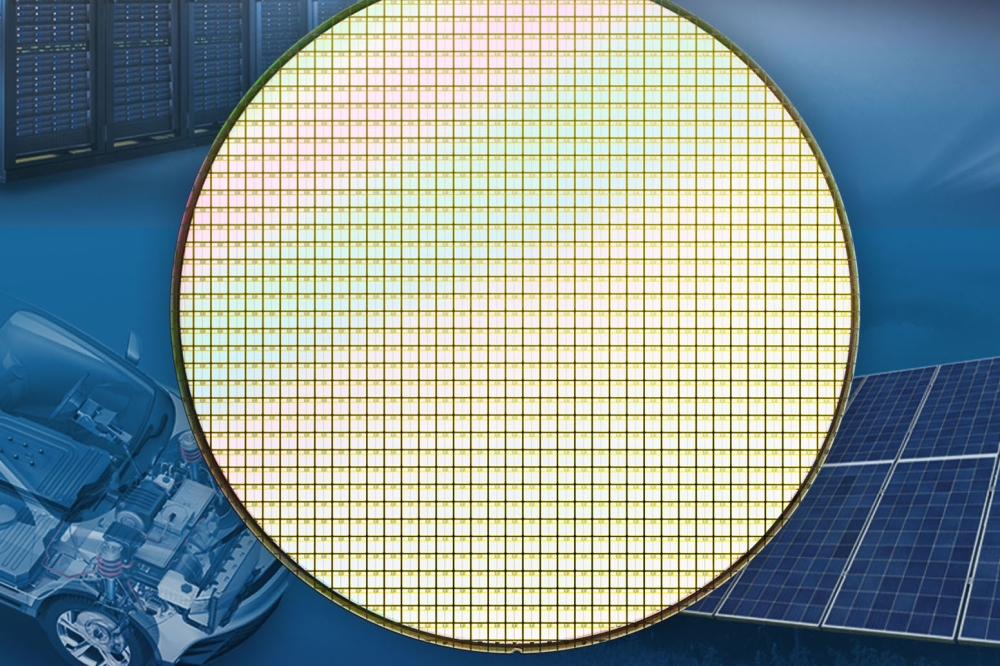
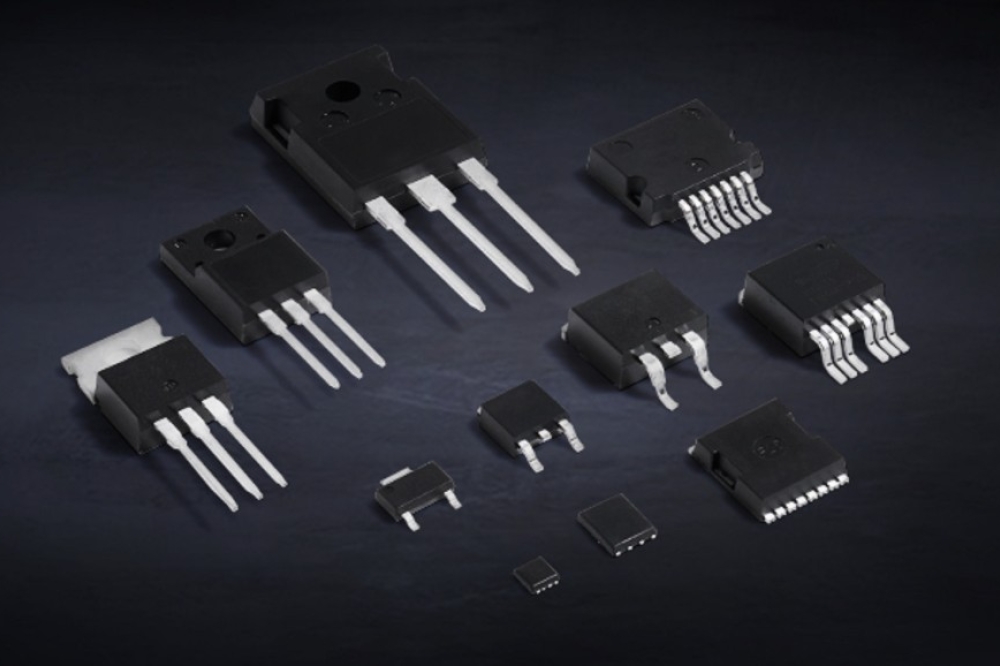
X-FAB’s wide-bandgap technologies encompass both SiC and GaN, with the majority of associated revenue stemming from SiC customers. SiC wafer shipments reached 14,300 units in the first quarter, representing a 195 percent growth over the same period last year and a 28 percent increase from the previous quarter. These results, combined with a robust pipeline of opportunities, indicate strong market interest in X-FAB’s SiC portfolio, according to the company.
X-FAB’s GaN activities are focused on projects in development stage. In the first quarter, X-FAB delivered the first prototype of a 1,200 Volt GaN application on a customised 200-mm engineered substrate and started a customer project for a next-generation vertical GaN technology, contributing to the anticipated increase in GaN prototyping revenue in 2026.
Order intake for the first quarter reached $169.4m, remaining steady at a modest level but showing a sequential increase of 3 percent. Backlog at the end of the quarter was $308.4m, down 3 percent from $318.2m at the end of the previous quarter.
In the first quarter, automotive revenue came in at $121.6m, down 10 percent year-on-year and down 8 percent quarter-on-quarter. Apart from macroeconomic uncertainties, short-term automotive demand continued to be constrained by ongoing inventory adjustments, resulting in order levels which may not fully reflect actual market requirements.
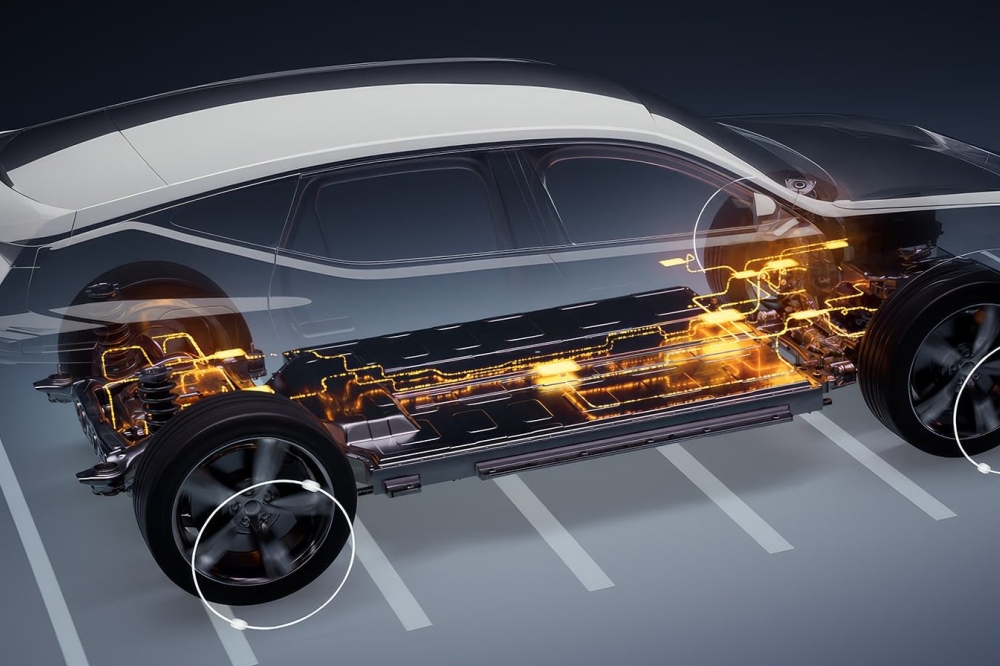
The transition to electrified mobility increases semiconductor content per vehicle in systems around battery management, thermal regulation, and on-board charging technologies. With its diversified technology portfolio, X-FAB says it is well positioned to capture business opportunities in internal combustion engine (ICE), hybrid, and battery electric vehicle (BEV) drivetrains.
Although automotive market visibility remains low, X-FAB experienced strong interest in its sensor technologies during the first quarter, particularly from the Asian region and China, with design wins for gas, pressure, and acceleration sensors, as well as a novel application for road noise cancellation in electric vehicles.
X-FAB's industrial business generated $52.0m in quarterly revenue, up 32 percent year-on-year and a 3 percent rise compared to the prior quarter. This growth was largely fuelled by robust SiC revenue and the growing demand for data centre power management solutions. Sustained high production of last-time-buy technologies also continued to contribute positively to first quarter revenue in the industrial end market.
Medical revenue came in at $19.2m, up 39 percent year-on-year and down 9 percent quarter-on-quarter. Main contributors were applications in pacemakers, echography, contactless temperature sensing, and DNA sequencing. Additionally, X-FAB secured an increasing number of medical ultrasound opportunities during the first quarter.
X-FAB’s microsystems and photonics business recorded an all-time high revenue of $33.7m, up 42 percent year-on-year and 35 percent quarter-on-quarter, driven by positive momentum across diverse applications and customers. X-FAB has successfully established a piezo-MEMS production line capable of making scandium‑doped aluminum nitride (AlScN) thin films for a key customer’s inkjet printhead application. Additional use cases include MEMS resonators and compact ultrasonic transducers, which have drawn interest from several customers eager to begin prototyping with X-FAB.
CMOS revenue in the first quarter was $156.9m, down 9 percent year-on-year and 14 percent quarter-on-quarter, mainly due to the continued softness of the automotive end market. At the same time, X-FAB secured several design wins for its 180nm and 110nm BCD-on-SOI technology ranging from data centre to medical ultrasound applications. A new 110nm BCD technology, which is under development, has also generated significant interest, particularly for the development of automotive sensor products.
Overall prototyping revenue in the first quarter came in at $19.1m, up 19 percent year-on-year and down 6 percent quarter-on-quarter.
Outlook
Q2 2026 revenue is expected to come in within the range of $190-200m with an EBITDA margin in the range of 17 percent and 20 percent. Steady recovery of X-FAB’s automotive business anticipated in the second half of 2026.The guidance is based on an average exchange rate of 1.15 $/€ and does not take into account the impact of IFRS 15.
Damien Macq, CEO of X-FAB Group: "Our expertise in high-voltage and high-power technologies ideally positions X-FAB within the dynamic environment across mobility, industrial sectors, and AI-driven infrastructure. As the need for efficient energy conversion systems grows – whether that's for data centres or electric mobility – our process portfolio supporting the electrification of everything is more relevant than ever.
"With a robust pipeline of opportunities across various customers and end markets, we made significant progress with diversifying our business, and we have seen strong traction in the first quarter, particularly in our microsystems and wide-bandgap business. Although the automotive market remains soft with limited visibility in the short term, we anticipate a steady recovery in the second half of 2026. Our commitment to innovation, strategic business development, and disciplined execution remains unwavering as we pursue the sustainable success of X-FAB and all stakeholders.”