
The current status of 800V for EVs
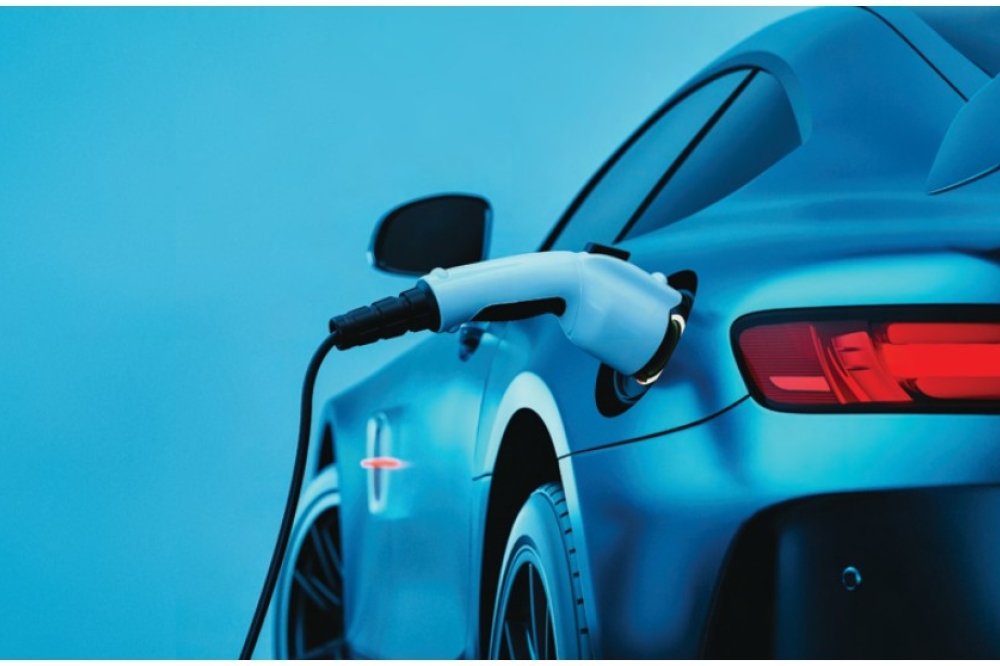
THE TRANSITION to 800V EVs affects the entire powertrain, including the power electronics. The automotive industry is increasingly adopting 800V platforms for battery electric vehicles (BEVs).
While 400V systems will remain relevant in the coming decade, the performance and efficiency benefits of 800V architectures are compelling and, in most cases, justify the required powertrain re-engineering. John Li, a technology analyst at market intelligence firm IDTechEx, explains the advantages of 800V platforms and how the transition is being achieved. The transition to 800V EVs is one which affects the whole powertrain, including the power electronics. In IDTechEx’s report, Power Electronics for Electric Vehicles 2026-2036: Technologies, Markets, and Forecasts, these trends are analysed and used to forecast the adoption of wide bandgap semiconductors SiC and GaN, as well as the entire power electronics market for electric vehicles (EV).
800V is mature and proven
The automotive industry is converging on 800V platforms for battery electric vehicles (BEVs), when earlier generations of vehicle were 400V. While 400V will certainly have a part to play in the next decade, the advantages of 800V platforms are undeniable, and in most cases worth the re-engineering the powertrain to accommodate this. Firstly, the higher voltage means that the battery can charge at greater power while using less current. For consumers that want charging to be as quick as refueling an internal combustion engine (ICE) vehicle, 800V vehicles can deliver greater average and peak rates of power. While this is generally the case, other parameters in the vehicle and also in the charger will determine the actual charging speed.
Secondly, since the voltage is much higher, significantly less current is required to deliver the same amount of power to the traction inverter and the motor. The end result is fewer losses and greater efficiency, allowing for either a small increase in range, or a reduction in battery size (and therefore weight and cost). Either case is advantageous, and SiC MOSFETs are much more efficient than Si IGBTs at 800V due to its material and device properties, such that the transition to 800V EVs and SiC MOSFETs go hand in hand.
Finally, since less current runs through the wiring harnesses in the vehicle, the diameter of the wiring harness can be significantly reduced. Copper is heavy and expensive, so a theoretical halving of the wiring harness diameter (excluding insulation and cooling requirements) delivers a compounded cost and weight saving. Even though BEVs are much more efficient than ICE vehicles, squeezing out extra efficiency at lower cost is beneficial to the consumer, but also to the OEM, many of which have struggled with the profitability of their BEVs.
There are different ways to achieve 400V to 800V compatibility
There is one glaring issue with building an 800V platform EV: the majority of DC chargers in the world are 400V, meaning that there needs to be an onboard system to convert the 400V DC from the charger to 800V DC to charge the high voltage battery. Without such a system, the majority of DC chargers cannot be used. Mercedes controversially did not include an 800V booster in its announcement for the Mercedes CLA EV earlier in 2025, although this has since been reversed.

IDTechEx compares the three different ways to have charging compatibility between 400V and 800V. Source: IDTechEx
IDTechEx has identified three key ways to achieve 400V to 800V charging compatibility, each with its own advantages and disadvantages. While each system is complex, IDTechEx has found that battery switching, DC boost converters, and traction integrated onboard chargers are the three main approaches from OEMs and tier-one suppliers to achieve 800V compatibility.
Boost converters are the simplest method, whereby an extra DC-DC converter is installed onto the vehicle to boost the voltage from 400V to 800V before feeding into the high voltage battery. While this is simple, it is also costly to add this extra unit, especially when space in a vehicle is limited to begin with. This is the method used in the Porsche Taycan.
By switching the configuration of cells in charging, the battery pack can be charged as a mix of series and parallel connections to match the incoming voltage from the DC charger. The GMC Hummer and Tesla Cybertruck run variants of this technique to ensure charging compatibility.
Finally, traction integrated onboard chargers are a unique way to boost the voltage without the need for a separate DC-DC converter. The windings in the electric motor act as filter inductance, and are used to boost the voltage of the incoming DC from the charger without requiring a separate DC-DC converter unit. This is the approach used by Hyundai and Kia, and multiple tier-one suppliers have similar methods to boost voltage.
Rising power densities and thermal management for semiconductors
The increase in demand for high performance computing is resulting in the need for enhanced semiconductor performance, of which thermal management is a large component. IDTechEx’s report, “Thermal Management for Advanced Semiconductor Packaging 2026-2036: Technologies, Markets, and Opportunities”, covers some of the main materials and applications relevant to this growing technology sector, providing forecasts spanning the next decade.
The increasing need for semiconductor thermal management
AI-oriented CPUs and GPUs are seeing increased power density, providing a ‘critical engineering bottleneck’, as described by IDTechEx. As a result, thermal throttling, voltage droop and accelerated electromigration are highlighted as some of the key issues arising with this growing power density, which can create problems with performance, system reliability, and the lifespan of the silicon device.
There are also increased energy requirements to dissipate heat with higher power densities, meaning costs of cooling methods and infrastructure grow simultaneously. Increasing computational demands and power densities from semiconductors are also creating challenges for advanced semiconductor packaging. However, dynamic voltage/frequency scaling, power gating, and advanced power delivery networks are outlined by IDTechEx as potential means of solving these problems.
TIMs and material benchmarks
Thermal interface materials (TIMs) are necessary to transfer heat from the source to a heatsink. The movement from 2.5D packaging to 3D packaging will see a desire for TIMs to achieve low
thermal resistance. However, the TIMs selected are likely to be determined by a number of factors including thermal conductivity, mechanical reliability, ease of testing, cost, contact quality, and ability to be manufactured at high volumes. The TIMs currently available for semiconductor packaging include liquid metals, solid metals such as Indium foils, graphene sheets, and polymer-based TIMs. Liquid metals are known for being expensive, though can provide the desirable low thermal resistance, meaning there is always a trade-off to be had between performance and cost.
The exploration of new TIMs is ongoing, and includes materials such as thermal gels, indium foil, graphene sheets, and liquid metals, along with some novel and research-staged materials such as copper nanotube-based TIMs. Their qualities, including thermal conductivity, mechanical compliance, and ease of integration, are becoming increasingly important with the development of advanced semiconductor packaging. IDTechEx’s report, “Thermal Interface Materials 2026-2036: Technologies, Markets and Forecasts”, exclusively covers TIMs and their expected uptake over the next ten years.
Cooling approaches for HPC
Active liquid cooling will be necessary with the movement towards 3D packaging, according to IDTechEx, despite high-performance TIMs being able to provide some level of cooling functionality. Microfluidic cooling is one approach explored in the report, currently used within defense and miliary chip applications on a small scale, and therefore likely to be paving the way for wider commercial use in the future, despite its many challenges.
Air cooling, cold plate cooling, immersion cooling, and remote cooling, are four other types of technologies used within high performance computing (HPC) and are currently at different stages of scalability and commercialization. Cold plate cooling, both single and dual phase, is currently adopted in production HPC systems, and immersion cooling is primarily used for cooling multiple densely packed boards. Air cooling, however, is reportedly not scalable for high power density applications, while remote cooling, though not yet commercially available, is promising for future HPC applications. Their individual thermal capabilities, system impacts, integration complexities, and design constraints, are benchmarked in greater detail in IDTechEx’s report.
IDTechEx’s report further analyzes power trends, performance impacts, and power management in reducing arising challenges within the thermal management for semiconductors market.