UK universities partner with National Grid on clean energy

The UK's National Grid Electricity Transmission (NGET) has strengthened its collaboration with leading UK universities, awarding innovation contracts to ten academic institutions across the UK to support the scale, pace and ambition of the clean energy transition.
Through its innovation programme, the partnerships bring world class research and specialist expertise directly into NGET’s innovation portfolio, helping to address some of the most complex technical, operational and system wide challenges involved in building and operating the future electricity transmission network.
The partnerships, which cover the five-year period of the RIIO-T3 price control from 2026-2031, will provide access to cutting edge research, advanced capability and fresh thinking, spanning advanced engineering, digital technologies, whole system planning and sustainability.
RIIO T3 represents a step change in the infrastructure NGET must deliver – faster, more efficiently and more sustainably, while maintaining the highest standards of safety and resilience. With up to £31 billion of investment between 2026 and 2031, it will enable the connection of 35GW of new generation and storage and nearly double the amount of power that can be transported across the country.
Under the framework, academic partners will work alongside NGET innovation engineers and project teams to help turn research into deployable solutions, accelerate innovation at scale and embed new approaches into business as usual delivery. The flexible model also allows NGET to respond to emerging challenges and opportunities as RIIO T3 progresses.
The ten academic institutions partnered with NGET are the universities of Bath, Birmingham, Cardiff, Edinburgh, Exeter, Liverpool, Manchester, Southampton, Strathclyde, and Warwick.
The partnerships will help to develop and deliver projects in the following areas:
- Power electronics applications, including technologies that support increased capacity, controllability, stability and resilience of the electricity system
- Accelerating NGET’s digital transformation through research and deployment
- Energy system decarbonisation and low emission technologies
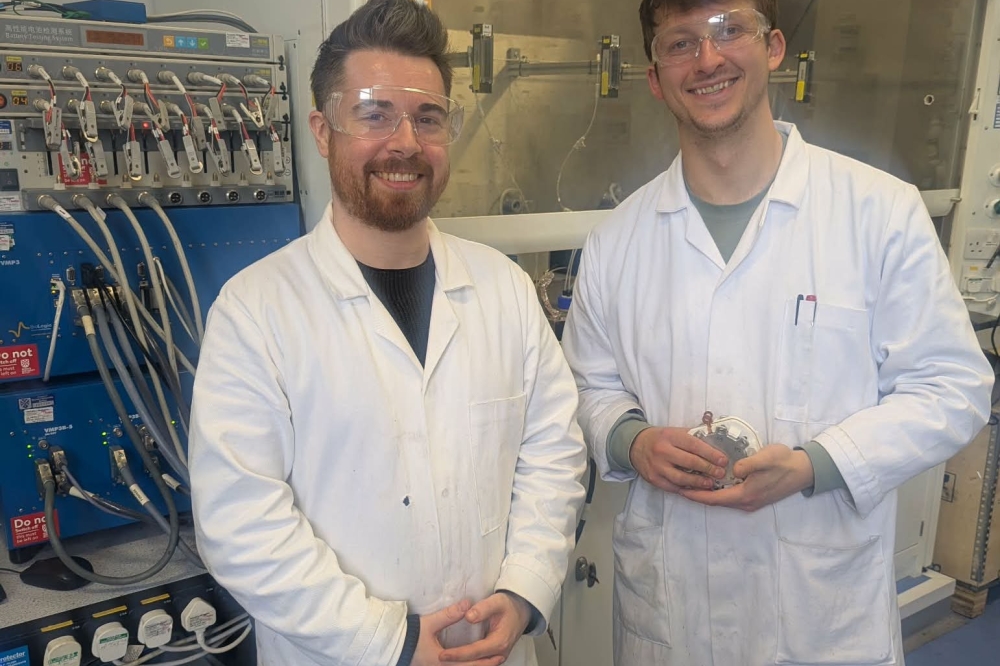
Furong Li (pictured above), deputy director of the Centre for Sustainable Energy Systems (SES) at the University of Bath, says: "We are thrilled to be a strategic partner with National Grid Electricity Transmission at this pivotal stage of the energy transition. Together, we will combine our expertise in whole-system modelling, data digitalisation, climate insights, and sustainability to develop transformative solutions, enhancing the efficiency, agility, and resilience of the UK's transmission system fit for the future."
As part of its wider academic collaboration, NGET has also joined with a Norwegian research institute, one of Europe’s largest independent research organisations operating at the interface of academia and industry. Through the ClampIT project, the institute is using sensors, advanced modelling and a digital twin approach to monitor transformer clamping pressure as assets age – supporting improved resilience, reduced failures and extended transformer lifespans.
NGET’s £140,000 investment in the project is being leveraged into around £1.6 million of research output through collaboration with multiple partners, demonstrating the value of this collaborative innovation model.
The partnerships build on NGET’s existing work with universities, including Strategic Innovation Fund projects such as PROMUPS, which is developing new probabilistic modelling approaches to network planning, as well as collaboration with the University of Manchester to develop an SF6 free retrofill solution aimed at replacing high carbon insulating gases in existing transmission equipment without the need for full asset replacement.