UK-developed water-based zinc battery outperforms Li-ion
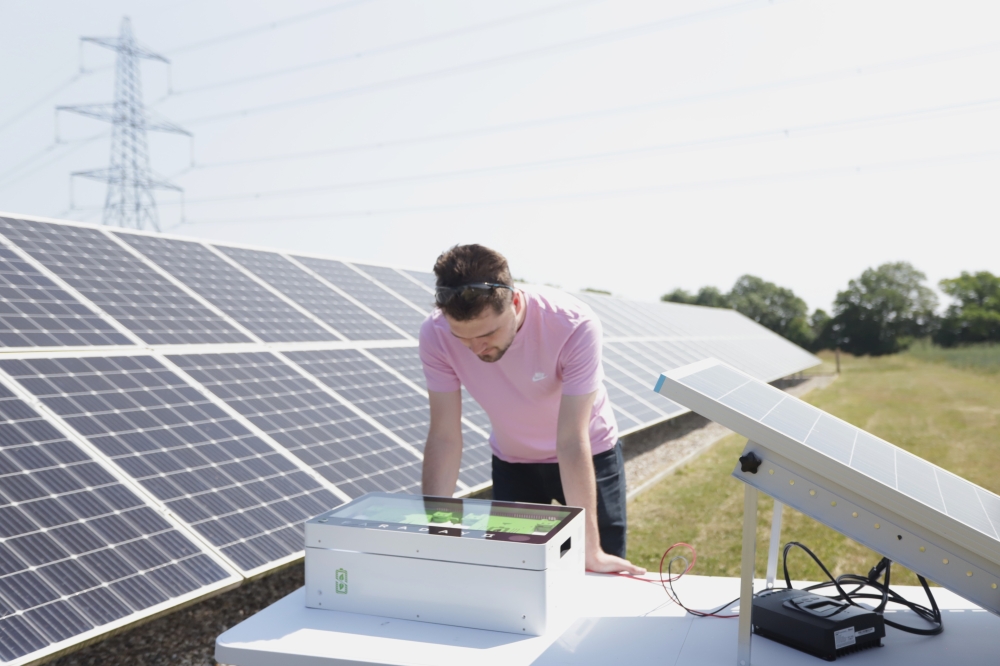
AI-driven computing and clean energy are creating unprecedented demands on power electronics and infrastructure. Batteries are one of the pressure points.
SuperDielectrics, a Cambridge-based energy storage firm, is adddressing these challenges with an innovative water-based zinc battery technology that delivers fast-response power smoothing for managing power fluctuations introduced by intermittent renewable energy and high workloads across data centres.
Now the company has announced independent test results confirming its superior performance across safety, cycle life, and charge and discharge speed in high power applications, compared to both standard and next-generation phosphate-based lithium-ion batteries. The testing was carried out by UK defence and security company, QinetiQ.
SuperDielectrics’ core innovation is a unique patented polymer, which has produced breakthrough results when tested against like-for-like standard and next-generation lithium-ion single-layer cells. The results showed no thermal runaway (a battery fire caused by uncontrollable self- heating), fire, or explosion under abuse conditions.
At 0°C, the results showed that charge performance was ~48x better. At room temperature, the results showed: up to 13x longer cycle life under high-power cycling (10 mins charge and discharge, 100 percent depth of discharge); discharge performance was ~10x better (maintained >85 percent nominal capacity, achieved at 100degC, or 36 seconds); and charge performance was ~8x better (maintained >70 percent nominal capacity, achieved at 50C, or 1 minute 12 seconds).
Jane Hunter, CEO, SuperDielectrics, said: "SuperDielectrics has a UK-designed, globally scalable technology for a future rack-level and grid-scale power buffering solution, enabling safer, lower-cost and higher-density AI compute infrastructure and grid stabilisation capability compared to lithium- ion.
"Where lithium-ion is reaching its performance limits, adding SuperDielectrics batteries can enable our customers to deliver the same power with a fraction of the energy footprint - safer, smaller, and at significantly lower cost.”
Shelley Brown, CTO, SuperDielectrics, said: “These results provide independent benchmarking of the technology at the heart of our batteries: a proprietary polymer separator that combines rapid ion transport with the safety advantages of an aqueous electrolyte system. The outcome is an energy storage solution purpose-built for high-power, fast-cycling applications, offering an alternative to lithium-ion systems that typically rely on extensive oversizing and additional safety infrastructure to manage demanding power profiles."