The future of energy
Intelligent power semiconductor computing and the rise of in-power transistor AI.
By Danilo Pau, IEEE Fellow, Intelligent Power Semiconductor Computing, STMicroelectronics
The silent revolution in power electronics
In the modern industrial landscape, power electronics serves as the “heartbeat” of technological progress. From the traction inverters driving electric vehicles (EVs) to the massive grid injection systems of AI server farms, power transistors are the foundational backbone. However, as we push these systems toward higher efficiency and greater power density, they encounter significant physical and reliability challenges. The traditional approach—relying on external microcontrollers and rigid physics-based models—is reaching its limits. We are now entering the era of Intelligent Power Semiconductor Computing, a paradigm shift where the transistor itself becomes capable of sensing, learning, and predicting its own operational future.
The critical role of power transistors across sectors
Power transistors are no longer just simple switches; they are sophisticated components integrated into diverse, high-stakes environments. According to recent research from STMicroelectronics, their roles can be categorized into several critical sectors:
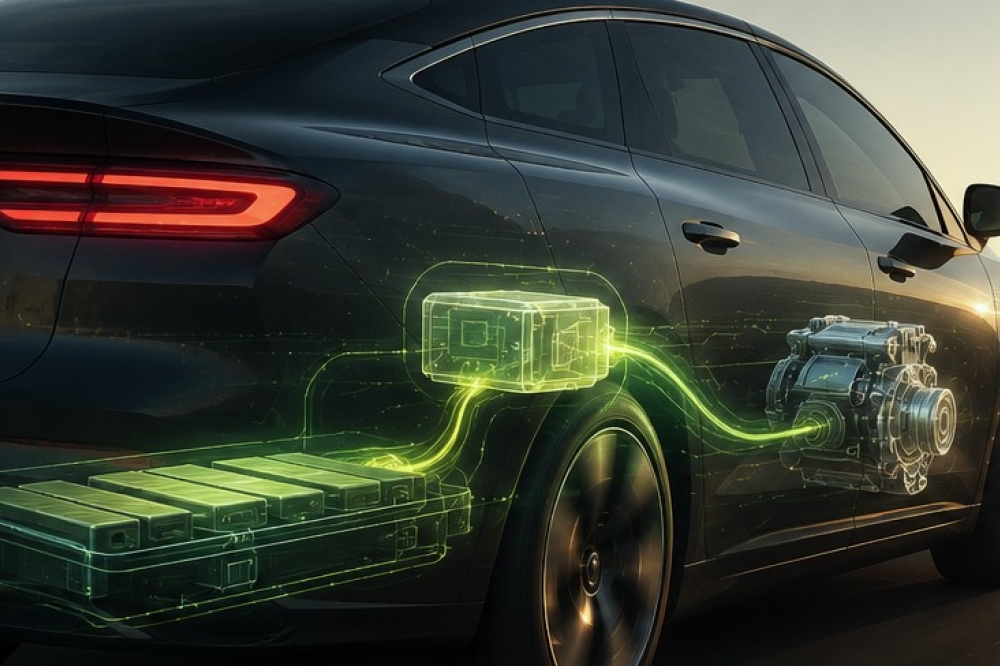
• EV Powertrain: In this sector, power transistors act as the traction inverters for electric motors and manage DC-DC conversions for battery chargers and Battery Management Systems (BMS).
• Energy Converters: They provide the backbone for Uninterruptible Power Supplies (UPS) and network protection, ensuring stable power delivery to server supplies.
• Aerospace: In aviation, these semiconductors control propellers, actuators, and manage isolated power distribution systems.
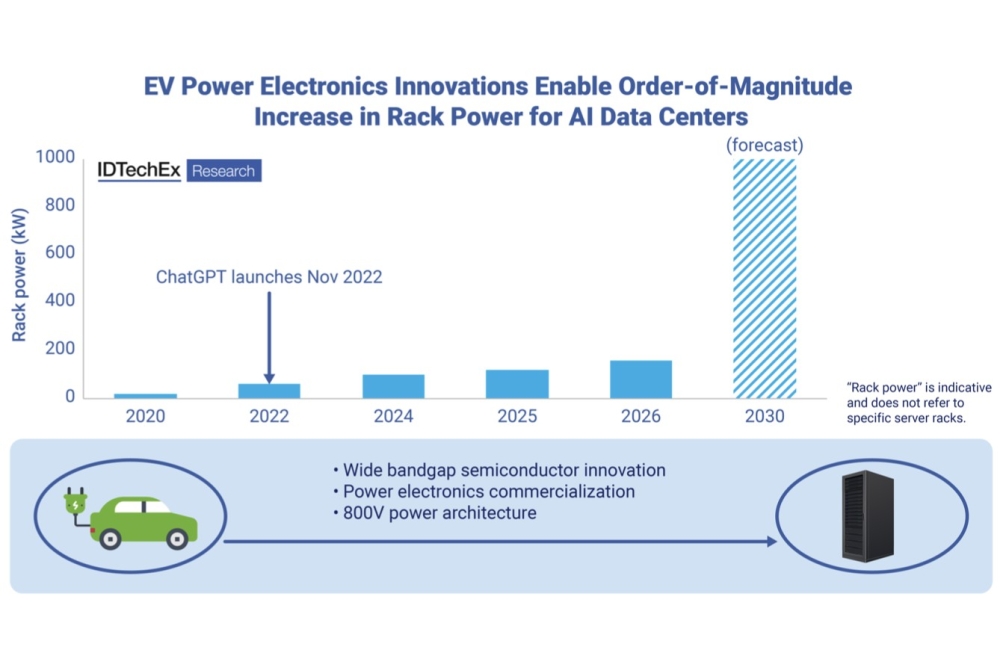
• AI Farms: As artificial intelligence demands massive energy, power transistors manage grid injection and panel optimization to keep data centers running efficiently.
Despite their ubiquity, these components face mounting challenges that threaten system reliability.
The reliability wall: challenges in modern semiconductors
As industry transitions toward Wide Bandgap (WBG) materials like Silicon Carbide (SiC) and Gallium Nitride (GaN), the performance ceilings are rising, but so are the complexities. These materials allow for higher switching frequencies and better breakdown voltages, yet they introduce new failure modes.
The most significant factor leading to the failure of power semiconductors is heat. Thermal management is a constant struggle, with “self-heating” and “thermal runaway” posing catastrophic risks to the entire system. Furthermore, scaling these transistors for better integration introduces secondary physical effects that are difficult to model using traditional methods.
The intelligence dilemma: physics-based vs. traditional AI
To prevent catastrophic failures, industry has traditionally used two modeling approaches:
• Physics-Based Models: These offer high interpretability but are computationally demanding and rigid. They often fail to match the time-varying occurrences of real-world operations.
• Legacy AI Models (RNNs/LSTMs): While highly accurate and adaptable, Recurrent Neural Networks (RNNs) are too “heavy” for deep edge deployment. They require too many data to feed the learning process, very long learning times.
Current Convolutional Neural Processing Units (NPUs) are not capable to accelerate them.
Furthermore these workloads are not quantization friendly. All in one these methods fails to meet tight latency requirements of power electronics, which often operate in the microsecond (μs) or hundreds of nanosecond (ns) domain.
This creates a gap: we need the intelligence of AI but to fit within the extreme constraints of a power transistor package.
Tiny perceptual on line learning AI: intelligence at the nano-edge
The solution lies in Tiny Perceptual On Line Learning AI. The goal is to move beyond external monitoring and enable the power transistor to “predict its own operative conditions” in real-time. And including the capability to learn and deploy at scale, transistor per transistor as their single story over operative time can be its own experience. This requires a radical rethinking of AI architecture to fit within extreme hardware constraints:
• Power Consumption: µW (microwatt) envelope.
• Clock Speed: 10 to 40 MHz.
• Memory: Total SRAM between 40 and 88 KiB.

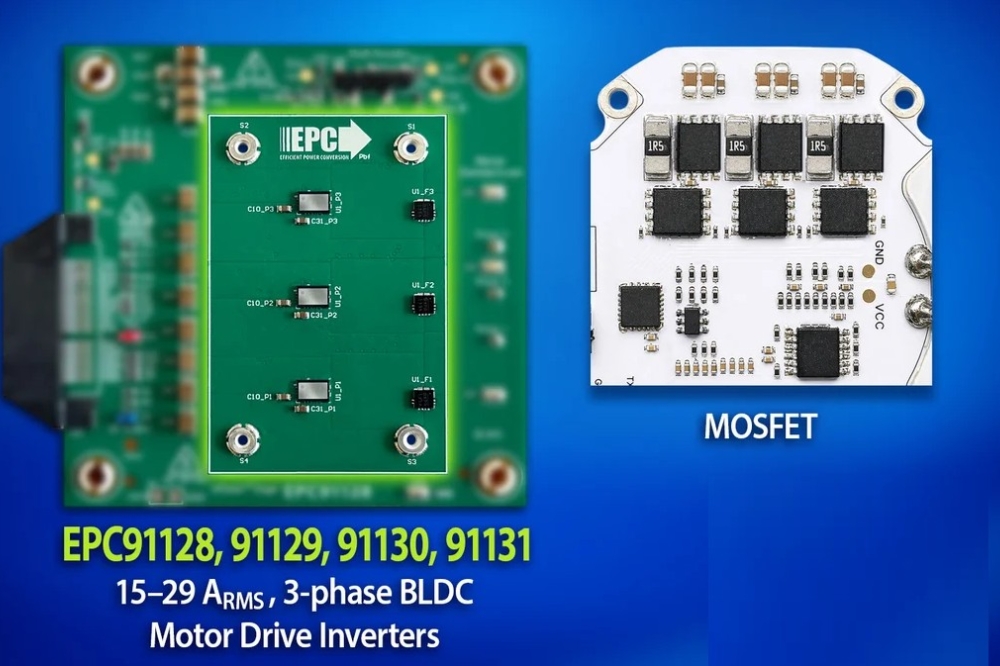
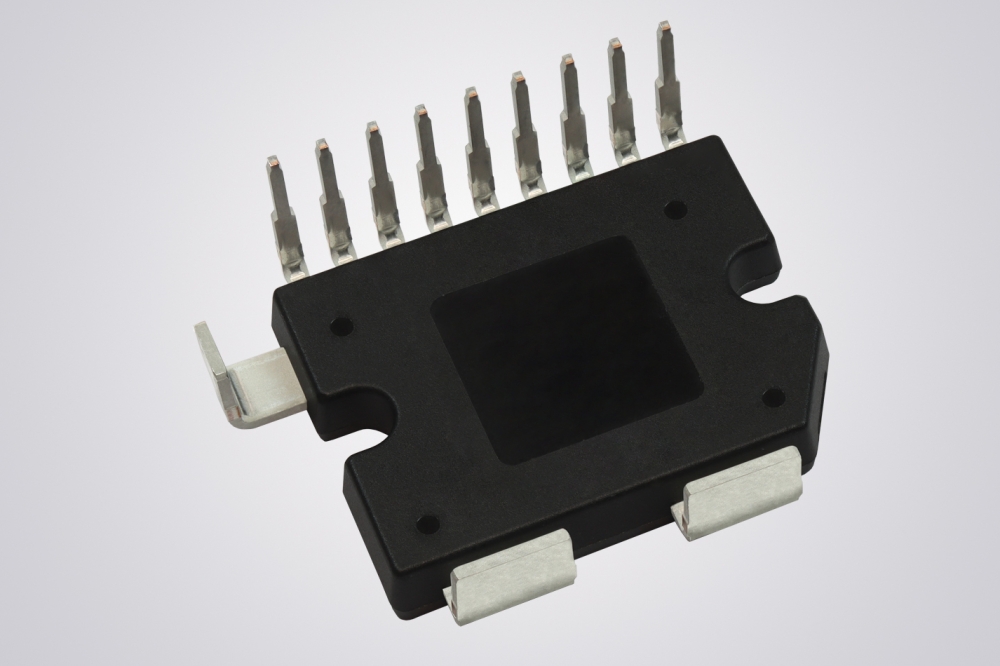
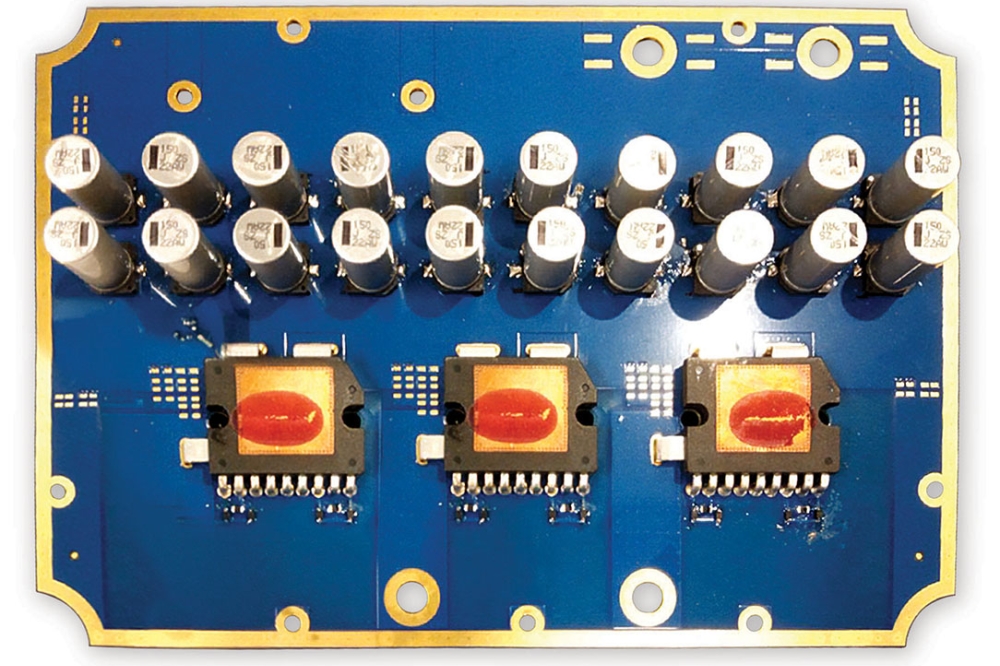
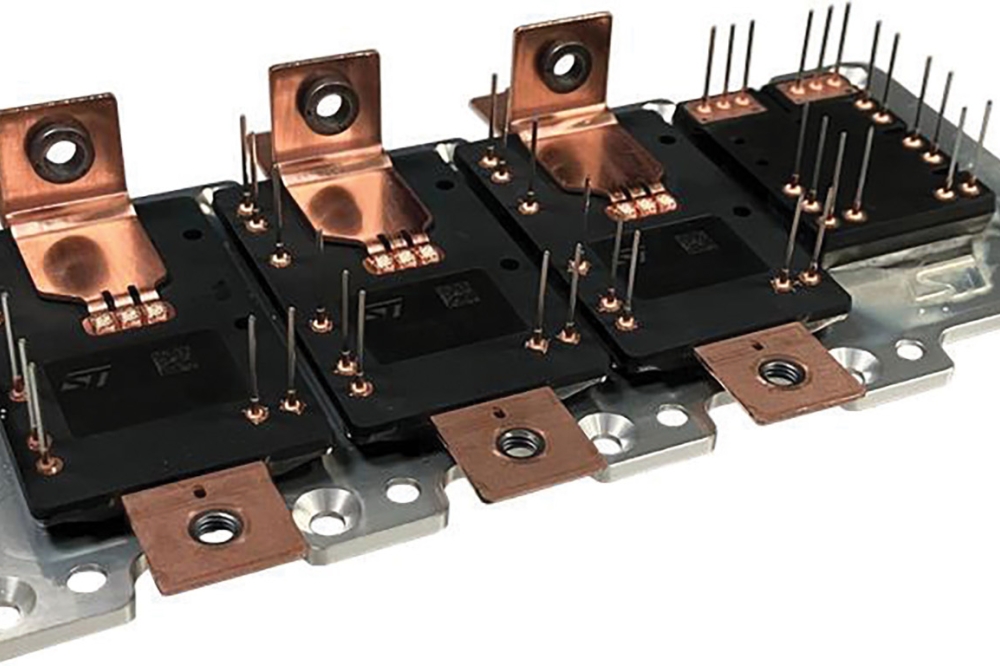
A diagram showing the multiple ST power transistors, mounted on a board.
Reimagining the neuron: the RBF-NN breakthrough
To meet these constraints, researchers have moved away from fixed, deep neural networks toward Radial Basis Function Neural Networks (RBF-NN). This architecture offers three transformative advantages:
• Dynamic Topology
Unlike standard AI, the RBF-NN utilizes a dynamic hidden layer. It can auto-allocate new neurons when the prediction error exceeds a certain threshold and de-allocate inactive ones to minimize memory footprint. A typical configuration might include 10 fixed input neurons, a hidden layer that scales up to 50 neurons, and a single output neuron.
• Gradient-Free Learning
Perhaps the most significant breakthrough is the removal of the Backpropagation (BP) algorithm. Traditional AI learning is “gradient- heavy,” requiring massive RAM to store activation derivatives. The RBF-NN uses Gaussian activations characterized by specific centers and radii, allowing for zero-gradient computation. This drastically accelerates learning and permanently removes the memory overhead associated with traditional training.
• Physics-Informed (PI) Integration
To ensure the AI doesn’t produce “hallucinated” or physically impossible predictions, a Physics- Informed (PI) variant was developed. The PI-RBF-NN integrates physical degradation constraints directly into the loss function. This enforces monotonic decreases and boundary consistency, guaranteeing that predictions for Remaining Useful Life (RUL) remain stable and grounded in physical reality.

A comparison table showing the drastic reduction in parameters and
memory usage between traditional RNNs and the new RBF-NN architecture.
Validating the vision: The data behind the hype
The effectiveness of this approach has been validated using the NASA Ames Research Center Prognostics Center of Excellence dataset. Researchers tested discrete IGBTs (Insulated-Gate Bipolar Transistors) under thermal overstress. The results were staggering:
• Accuracy: The RBF-NN achieved an average R2of 0.9867, outperforming traditional RNNs (0.9836).
• Efficiency Delta: While a standard RNN required 7,381 parameters and over 68 MB of training RAM on an Intel i7, the RBF-NN required only 561 parameters (7.6% of the weight) and fit entirely within < 21 KiB of RAM.

A cross-section of a “System-in-package” showing a DSP chip physically
bonded within a transistor housing, representing autonomous
intelligence.
From concept to silicon: the STRED DSP
The hardware realization of this vision is the STRED DSP. This STMicroelectronics home-made micro-processor is so tiny in power and silicon area that it can be physically bonded inside a standard discrete power transistor package. This is the ultimate vision of System-in-package (SiP): a transistor that no longer relies on an external processor but autonomously manages its own lifecycle.

A roadmap diagram showing the progression from simple transistors to
agentic AI power control, marked by decreasing latency requirements.
The roadmap: toward agentic AI power control
The integration of AI into power electronics is following a clear evolutionary path:
• In-Transistor AI Computing: Real-time lifecycle prediction at the component level.
• In-Power Module AI Computing: Coordinated intelligence across multiple components, handling aging of discrete and their varying tollerances.
• Agentic AI Power Control: Autonomous systems capable of microsecond to nano-latency critical decision-making to optimize power distribution (especially in AI farms), performance and prevent failure before it happens.
Conclusion: the autonomous future
The marriage of power electronics and Tiny Perceptual AI is more than just a technical curiosity; it is a necessity for a sustainable, electrified future. By enabling power transistors to “learn” and “predict” without the burden of heavy computation or external dependencies, we are creating a more resilient industrial infrastructure. From the cars we drive to the grids that power our AI, the next generation of energy management will be silent, autonomous, and incredibly computationally clever.

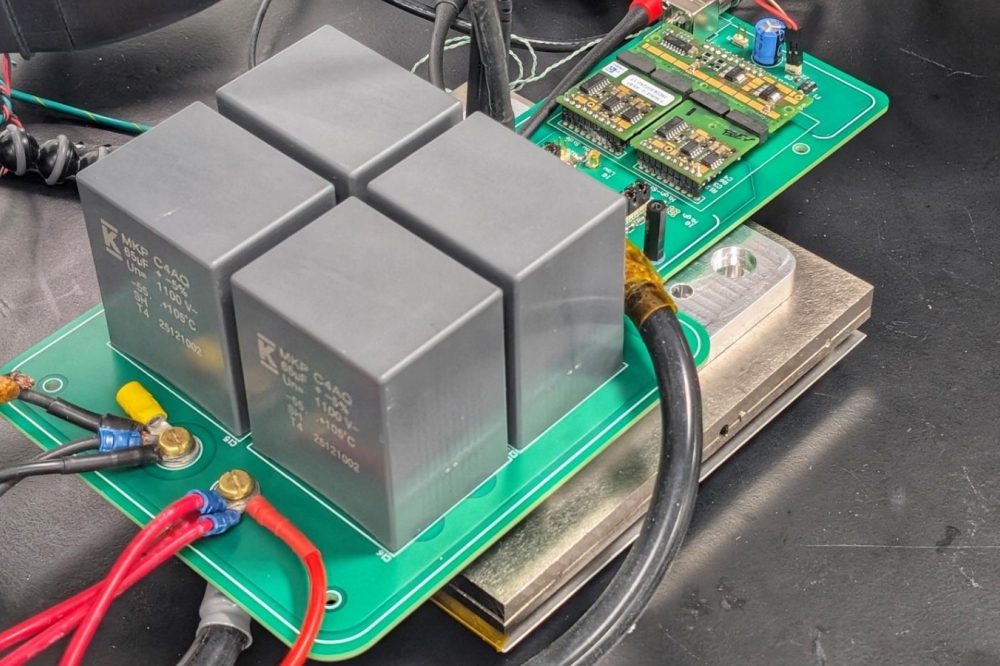
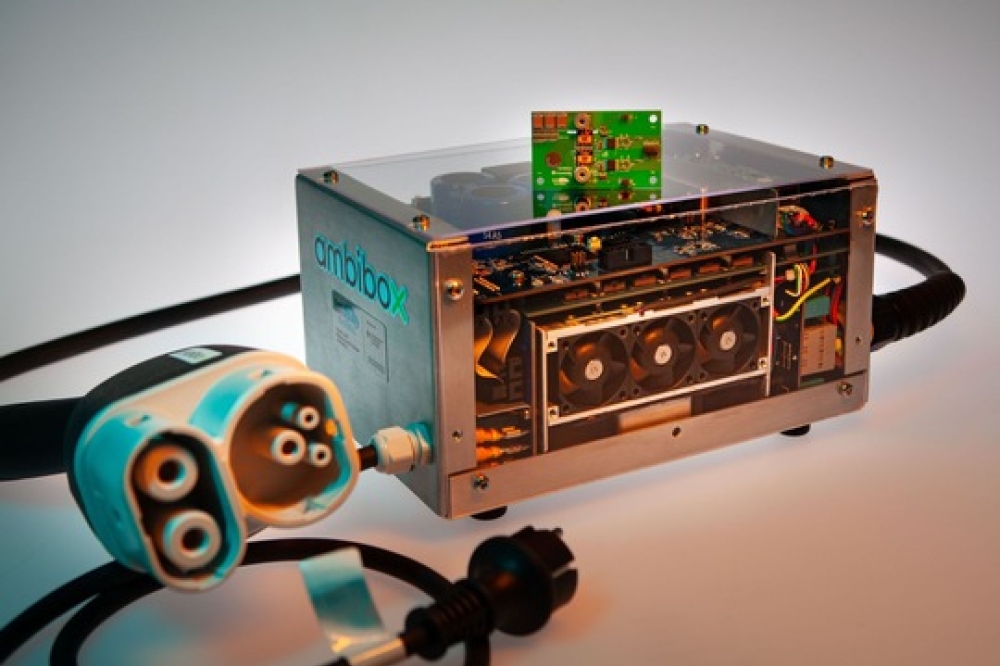
Main image: A high-detail view of a power electronic circuit board with prominent copper coils and semiconductor components, representing the heart of modern power systems.