Driving efficiency through system-level optimization in next-generation power electronic systems
Future efficiency gains in power electronics require holistic system optimization across electrical, thermal, mechanical, and control domains, not isolated components.
By Dr. Fabian Hohmann, Power Electronic Systems, Systems Engineering onsemi
Global megatrends such as climate-change mitigation, electrification of mobility, expansion of data centers, and the integration of renewable energy sources are driving an explosive growth in electrical power demand. Across these domains, power electronic systems serve as the essential interface between generation, storage, and consumption. Consequently, efficiency and power density have become the most critical key performance indicators (KPIs) for next-generation power electronics.
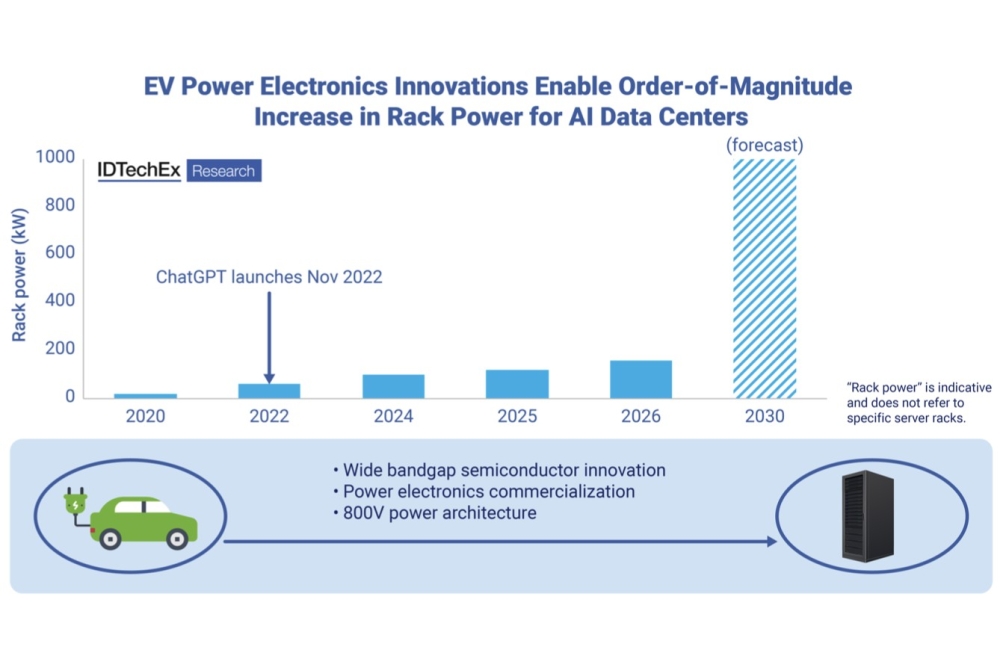
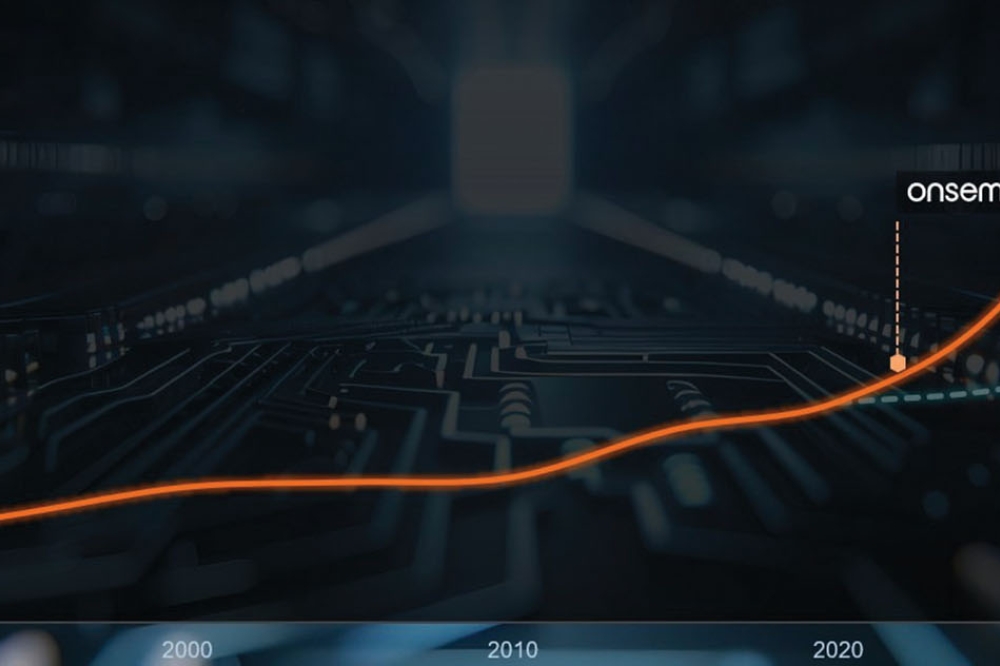
Historical development shows a continuous increase in system-level power density of approximately 10– 20 % every two years (see Figure 1). Looking ahead, this trend is expected to accelerate further, driven by the rapidly growing energy demand of hyperscale data centers and the increasing need for smaller, lighter, and more efficient systems in traction, aerospace, and emerging application domains such as neurotechnology. As a result, many roadmaps now assume a transition from linear to exponential scaling, with an effective doubling of system-level power density approximately every two years.
Modern power electronic systems comprise a tightly coupled network of power semiconductors, passive components, cooling solutions, control software, and mechanical integration. Optimizing these elements independently typically leads to local optima but fails to unlock the full performance potential of the overall system. This article outlines a system-level optimization methodology for power electronic systems and illustrates why breaking down traditional silos between design disciplines is essential to achieve the efficiency gains required for future applications.
Drivers for system-level optimization
Electrification and power-demand growth
Electrified vehicles, heat pumps, and renewable-energy integration significantly increase local and global power demand. In parallel, data centers already consume several gigawatts of electrical power in individual regions, with demand rising sharply due to artificial-intelligence workloads. Even marginal efficiency improvements in conversion stages translate into substantial energy savings, reduced cooling requirements, and lower operational costs when deployed at scale.

Figure 1: Historical and future power density in power electronic systems.
At the same time, regulatory pressure and sustainability targets increasingly demand higher overall system efficiency rather than isolated component improvements. This shifts the optimization focus from individual devices toward holistic energy flow across the system.
Limits of component-level optimization
Wide-bandgap devices such as SiC MOSFETs and GaN HEMTs provide lower switching losses and allow higher operating frequencies compared with silicon devices. Nevertheless, their full potential cannot be realized if parasitic inductances, thermal bottlenecks, or overly conservative control strategies dominate system behavior. For example, reducing transistor switching losses may expose the DC-link capacitor, gate-driver dynamics, or cooling system as new limiting factors.
In such cases, optimization confined to a single component merely shifts losses within the system rather than reducing them globally. As power density increases, these interactions become increasingly critical, reinforcing the need for system-level design methodologies.
From component silos to system thinking
Traditional power-electronic design follows a hierarchical structure: semiconductor selection, packaging, cooling, passives, and control are treated as largely independent design steps. This “silo” approach simplifies project organization and responsibility allocation but inherently restricts achievable system performance.
In contrast, system-level optimization treats the power-electronic converter as an integrated electromechanical system. Electrical waveforms, thermal behavior, mechanical constraints, and control dynamics are evaluated simultaneously. This enables informed trade-offs between competing objectives such as switching speed, electromagnetic interference (EMI), thermal cycling, efficiency at partial load, and long-term reliability. Breaking down functional silos does not imply abandoning domain expertise. Instead, it requires structured interfaces and shared metrics that allow each discipline to contribute toward a common system objective.

Figure 2: System of inverter and electrical machine
Efficiency gains through system optimization
Automotive traction inverters as a case study
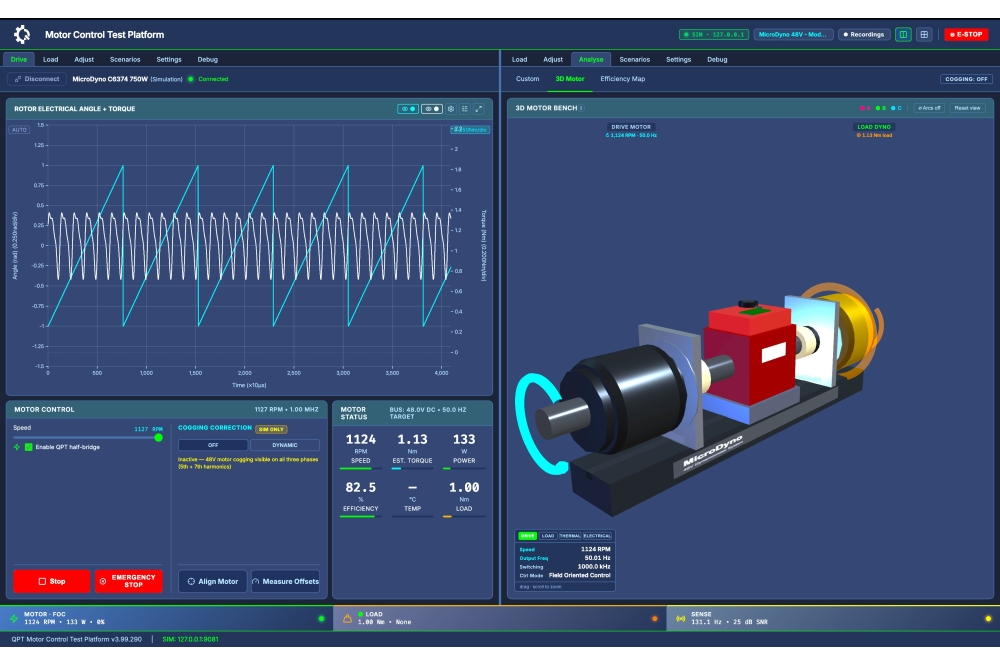
In electric vehicles, drivetrain efficiency is strongly determined by the interaction between the traction inverter and the electric machine. Optimizing both jointly yields significantly higher efficiency gains than improving the inverter alone, resulting in a driving range increase that is more than four times greater than what can be achieved through inverter-only optimization. This requires deliberately operating neither component at its individual optimum but instead aligning both toward the global optimum of the combined system.
The optimal operating point emerges from a balanced trade-off between inverter switching behavior and the loss characteristics of the electric machine. A system-level perspective ensures that losses are minimized across both components simultaneously, rather than optimizing them in isolation
Coordinated electrical and thermal design
While the example in the last caption only considers two subsystems, a complete vehicle offers significantly more degrees of freedom for system-level optimization (see Figure 3). Only by optimizing all relevant subsystems in an integrated manner can the full system performance be realized. Higher switching frequencies reduce passive-component size and improve dynamic performance but simultaneously increase switching losses and thermal stress. Conversely, oversized cooling systems reduce junction temperatures but add volume, mass, and cost, reducing overall power density.
System-level optimization quantifies these trade-offs by jointly modeling electrical losses and thermal resistances. For example, a power module with Figure 3: Electric vehicles represent a near-ideal thermal coupling to its cooler enables more multidisciplinary system‑level optimization problem. aggressive switching strategies without violating junction-temperature limits. However, the cooling system must be designed to handle transient heat flux rather than relying solely on conservative steady-state assumptions. By treating electrical and thermal domains as interdependent rather than sequential, designers can avoid overly conservative design margins while maintaining reliability.
Control and software as system-level enablers
Control algorithms and embedded software increasingly define system efficiency and robustness. Adaptive modulation schemes, dynamic gate-driver control, and operating-point-dependent switching strategies allow converters to maintain high efficiency across wide load ranges.
In a system-optimized design, control software is not an afterthought but a core optimization variable. Software can compensate for hardware limitations, mitigate parasitic effects, and enable operation closer to physical limits when supported by accurate sensing and thermal models. The integration of software into system-level optimization also enables future updates and performance improvements without hardware changes.
DC-Link, magnetics, and passive components
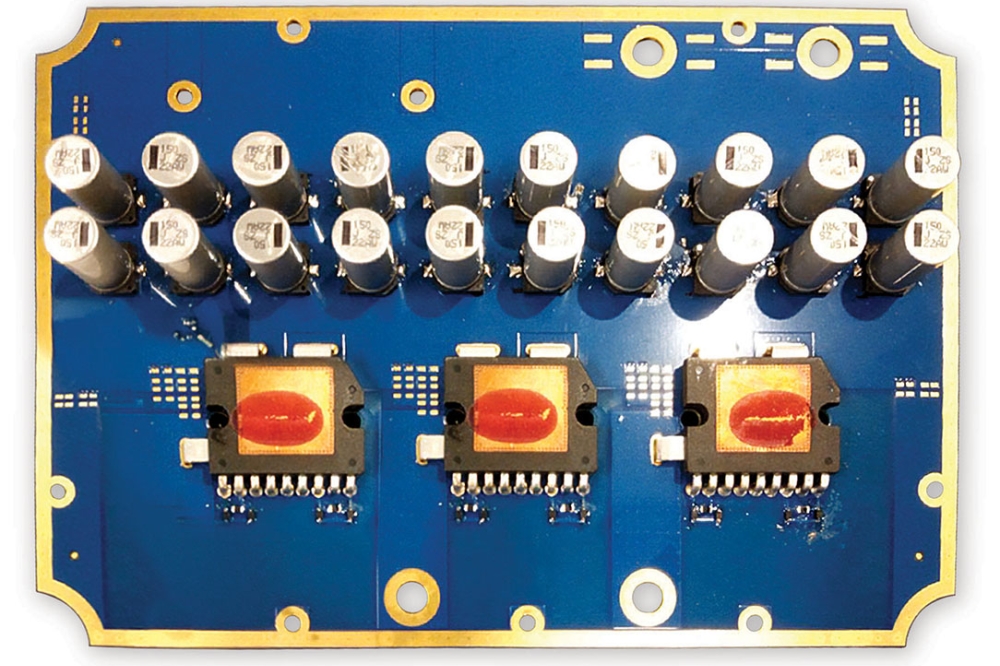
Passive components are frequently the hidden bottleneck in high-power-density systems. DC-link capacitors, bus structures, and magnetic components strongly influence switching behavior, EMI, and reliability. Their electrical performance cannot be separated from mechanical placement and thermal coupling.
System-level optimization explicitly considers the interaction between switching transients, parasitic inductances, and capacitor technology. This enables reduction of voltage overshoot, improved dv/dt control, and lower overall loss. Similarly, optimized magnetic design balances copper loss, core loss, thermal dissipation, and acoustic noise within a unified framework.
Multidisciplinary design and parallel development
One major obstacle to system-level optimization is organizational rather than technical. Electrical, mechanical, and software engineers often operate sequentially, leading to long development cycles and suboptimal integration.
Future power electronic systems demand parallel, multidisciplinary development where design iterations span the entire stack simultaneously. This approach shortens design cycles, exposes system-level trade-offs early, and avoids costly late-stage redesigns. It also enables continuous optimization rather than fixed design freezes between stages.
Role of advanced modeling, data, and validation
Accurate system-level optimization relies on high-fidelity models that capture interactions between components. This includes:
• Electrical models with realistic parasitic elements and switching behavior
• Thermal models linking junction temperature to cooling architecture and ambient conditions
• Control models reflecting real-time constraints, sensor accuracy, and communication delays
Increasingly, data-driven methods and artificial-intelligence techniques support design-space exploration and sensitivity analysis. However, these tools complement rather than replace physical insight. Meaningful optimization requires identifying which parameters materially affect system performance and which variations are secondary.
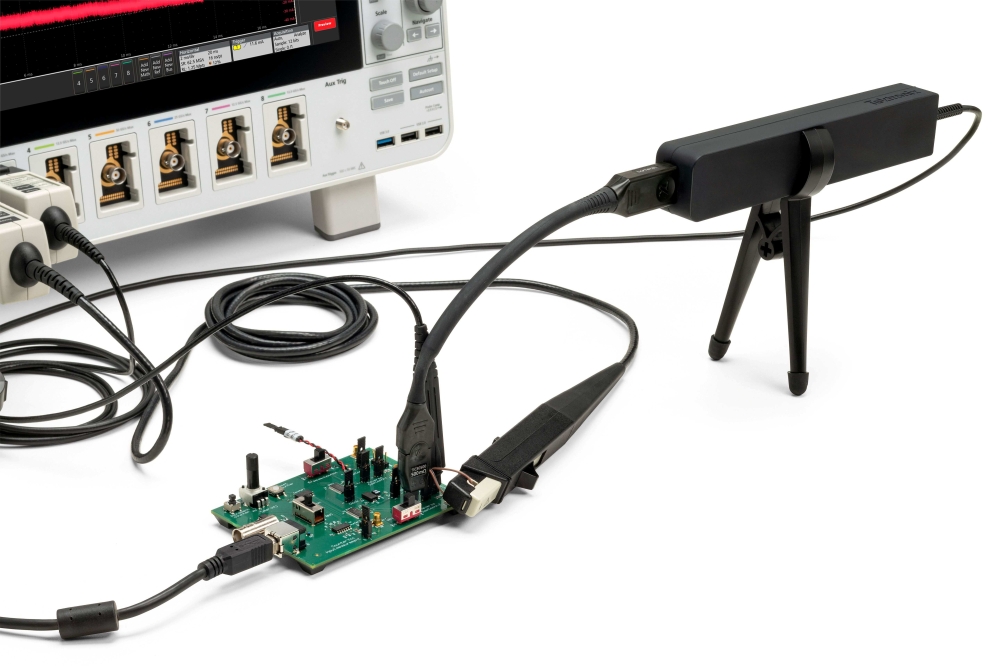
Equally important is experimental validation. System-level optimization must be verified through targeted measurements that confirm predicted loss distributions, thermal behavior, and dynamic performance under real operating conditions.
Innovation beyond incremental improvement
Historical breakthroughs often arise not from incremental refinement but from rethinking fundamental assumptions. The transition from silicon to wide-bandgap semiconductors exemplifies such a paradigm shift. Likewise, future efficiency leaps may result from architectural changes—such as higher DC-link voltages, integrated drive units, advanced cooling concepts, or software-defined power stages—enabled by holistic system design.
Leadership in power electronics therefore requires fostering a culture that encourages cross-disciplinary thinking, questioning established practices, and embracing controlled risk in pursuit of disruptive improvements.
Implications for industry and research
For industry, system-level optimization translates directly into competitive advantage through higher efficiency, reduced material usage, improved reliability, and shorter time-to-market. For academia and research institutions, it highlights the need for integrated curricula and research programs that bridge traditional disciplinary boundaries.

Figure 3: System of inverter and electrical machine
Close collaboration between semiconductor manufacturers, system integrators, and end users becomes increasingly important, as many optimization potentials span organizational interfaces rather than individual components.
Conclusion
The next generation of power electronic systems will be defined not by isolated component advances but by the effectiveness of system-level optimization. Efficiency and power-density targets driven by electrification and sustainability goals can only be met by coordinated co-design of semiconductors, passives, cooling systems, and control software.
By removing silo barriers, adopting multidisciplinary development approaches, and leveraging advanced modeling and data-driven validation, the power-electronics community can continue to drive innovation and enable the electrified future.